WildTrack3D
3D object tracking from a single video, in the wild
Q1What is the task?
Q2What does the model look like, and how is it trained?
Q3How is the training data prepared?
Q4Video training without vs with image pre-training
Q1 · Task
What is the task?
Ground-truth 3D tracks drawn on a CA-1M video (each object one colour).
Score: 3D AUC. On each frame where the object is present (≈2 FPS), success at threshold τ if the model says “present” and its 3D box has 3D IoU ≥ τ with the ground truth; τ = 0.05, 0.10, …, 0.50. Averaged over τ, frames, objects, then benchmarks.
Q2 · Model
What does the model look like?
SAM3.1 (2D)depth path (LingBot) and 3D headoutputs
Current version (LingBot depth, stage 1 in training). The video results in Q4 come from the earlier version, where depth entered as 72×72 patch means through a lift module before the 3D head.
Q2 · Training
How is it trained?
Stage 1 uses the WildDet3D image data and 3D head; stage 2 adds time through the SAM3.1 tracker.
Stage 1 with LingBot depth (in training, 4 nodes, batch 128): Omni3D AP3D 36.8 with depth / 29.6 RGB after epoch 2 of 12 (WildDet3D: 41.6 / 34.2).
Q3 · Data
What data is used for training?
Stage 2 · video, 7 datasets
| Dataset | Domain | Videos | Object tracks | FPS | 3D ground truth | Depth input | Share of clips |
|---|---|---|---|---|---|---|---|
| SA-V | everyday | 46,724 | 180,337 | 6 | pseudo-labels (next slide) | VGGT × metric scale | 0.55 |
| CA-1M | indoor scans | 3,157 | 380,575 | 10 | annotated scene boxes | FARO laser scan | 0.11 |
| Waymo | driving | 2,390 | 91,449 | 5 | LiDAR-labelled tracks | LiDAR | 0.09 |
| EmbodiedScan | indoor scans | 1,857 | 59,373 | ≈3 | annotated scene boxes | RGB-D sensor | 0.09 |
| SAIL-VOS 3D | synthetic | 1,900 | 34,470 | 8 | mesh extents | depth buffer | 0.08 |
| HOI4D | hand–object | 1,044 | 1,044 | 15 | 6D pose + CAD box | Kinect / RealSense | 0.06 |
| ADT | egocentric | 214 | 49,558 | 6 | digital twin | rendered GT | 0.02 |
- All converted to one format: per-frame 3D box (camera coordinates, metres), track id, intrinsics, depth.
- Videos used by the benchmarks are removed from training.
- 15% of stage-2 steps are stage-1 images.
Stage 1 · images, 14 datasets, 1,040,356 samples
| Dataset | Source | Samples | Depth |
|---|---|---|---|
| KITTI | Omni3D | 3,622 | LiDAR, sparse |
| nuScenes | Omni3D | 25,841 | LiDAR, sparse |
| Objectron | Omni3D | 34,356 | AR sensor |
| Hypersim | Omni3D | 55,537 | rendered, dense |
| SUN RGB-D | Omni3D | 4,876 | RGB-D, dense |
| ARKitScenes | Omni3D | 46,136 | LiDAR / ARKit, dense |
| CA-1M | CubifyAnything | 195,186 | FARO laser, dense |
| Waymo | Waymo | 78,680 | LiDAR, sparse |
| 3EED det | 3EED | 11,661 | LiDAR, sparse |
| 3EED ref | 3EED | 10,843 | LiDAR, sparse |
| FoundationPose | FoundationPose | 423,915 | rendered, dense |
| In-the-wild | WildDet3D | 88,847 | estimated, dense |
| V3Det | WildDet3D | 14,132 | estimated, dense |
| SA-V frames | ours (frames of SA-V) | 46,724 | VGGT × metric scale |
Q3 · Data
How are SA-V 3D labels made?
SA-V training videos with their 3D pseudo-labels (each object one colour; most SA-V videos are portrait). The other six datasets use their own annotated 3D boxes.
Q3 · Data
What do the video labels look like?
SA-V · everyday
CA-1M · indoor scans
Waymo · driving
EmbodiedScan · indoor scans
SAIL-VOS 3D · synthetic
HOI4D · hand–object
ADT · egocentric
One random training video per dataset, with its 3D ground truth (SA-V: pseudo-labels), on the ≈2 FPS training grid.
Q3 · Data
Which images are used in stage 1?
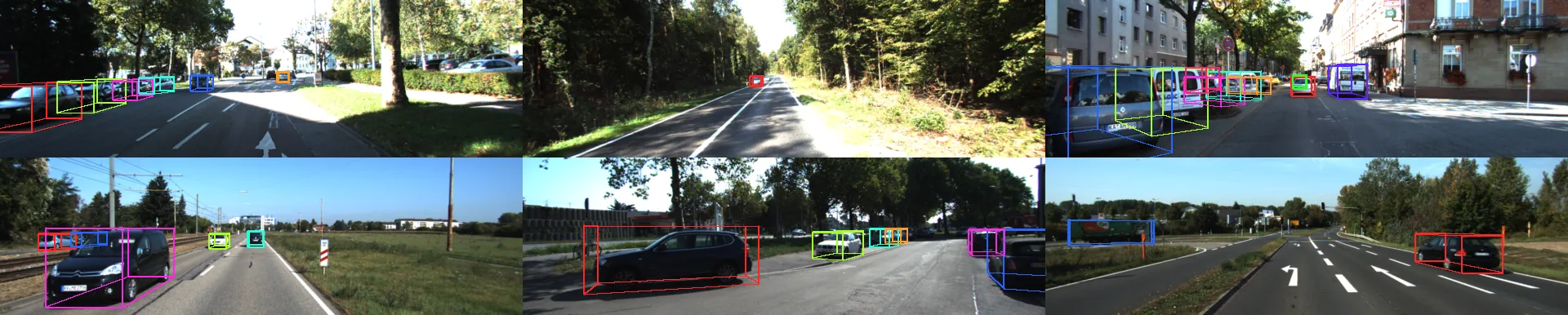
KITTI 3,622
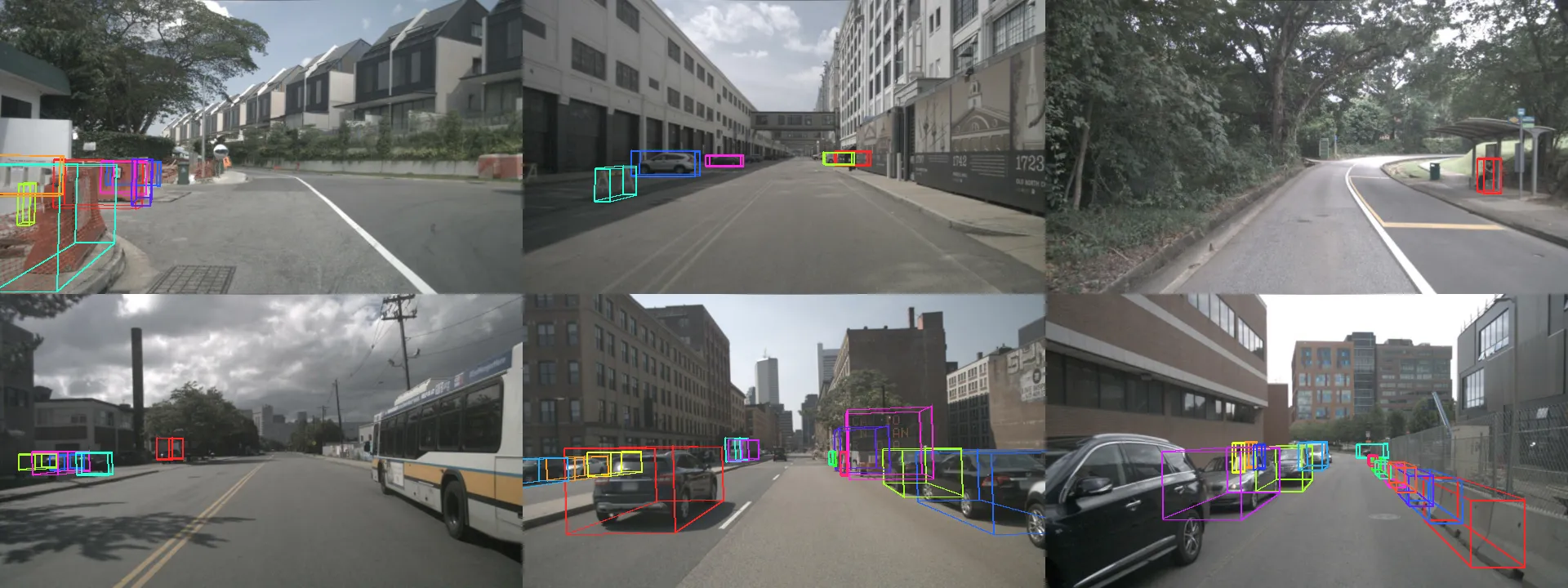
nuScenes 25,841
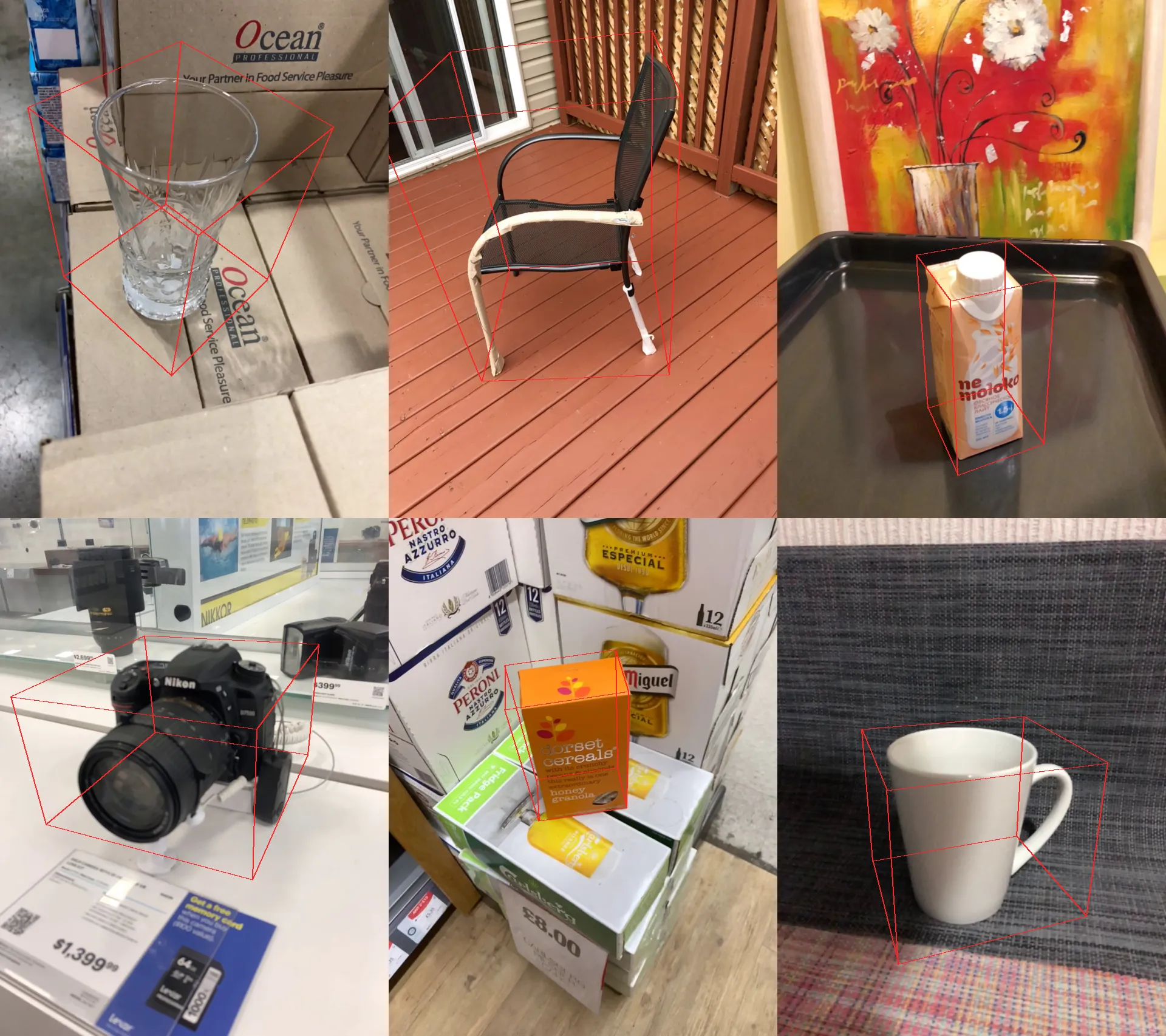
Objectron 34,356
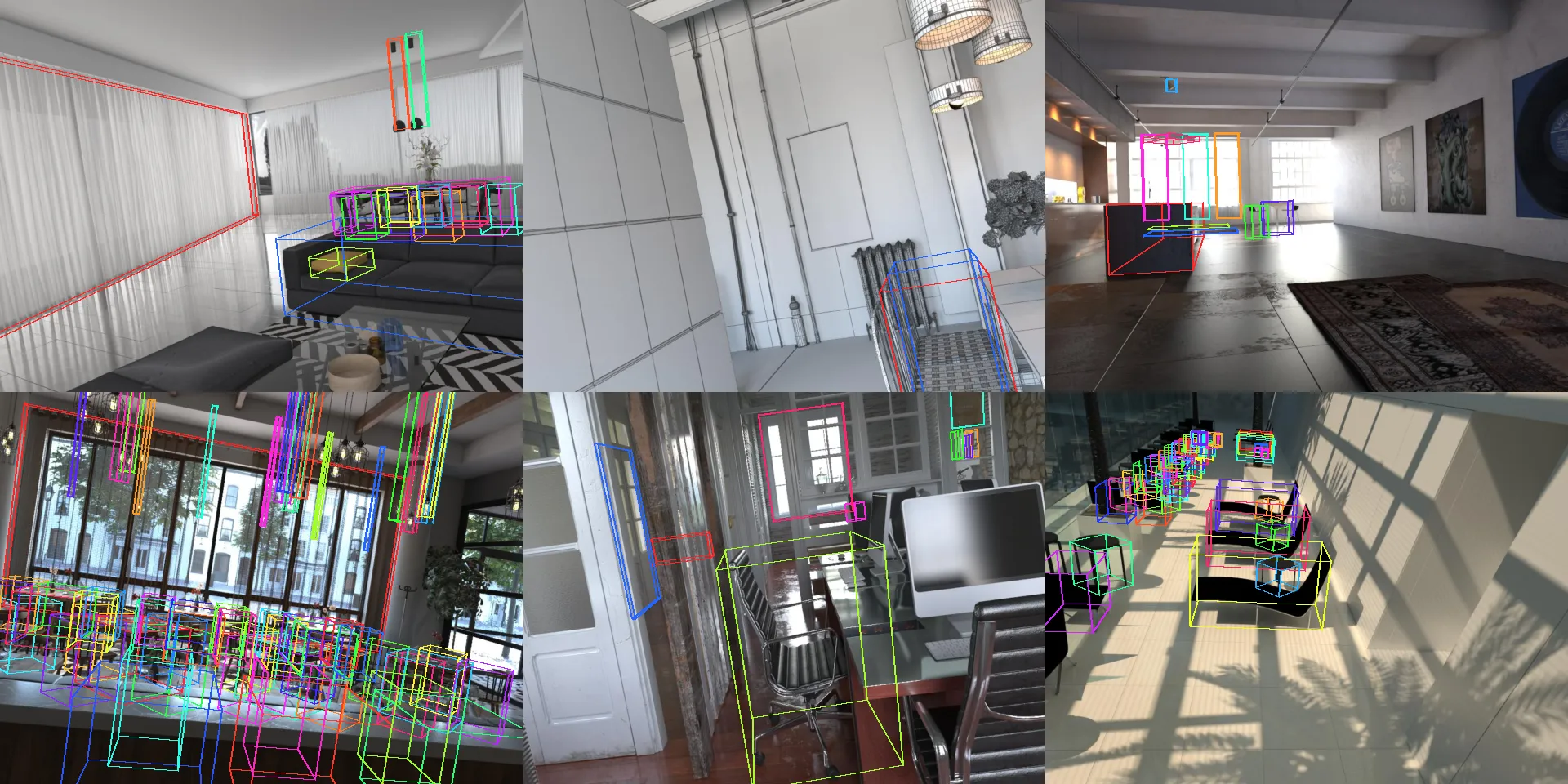
Hypersim 55,537
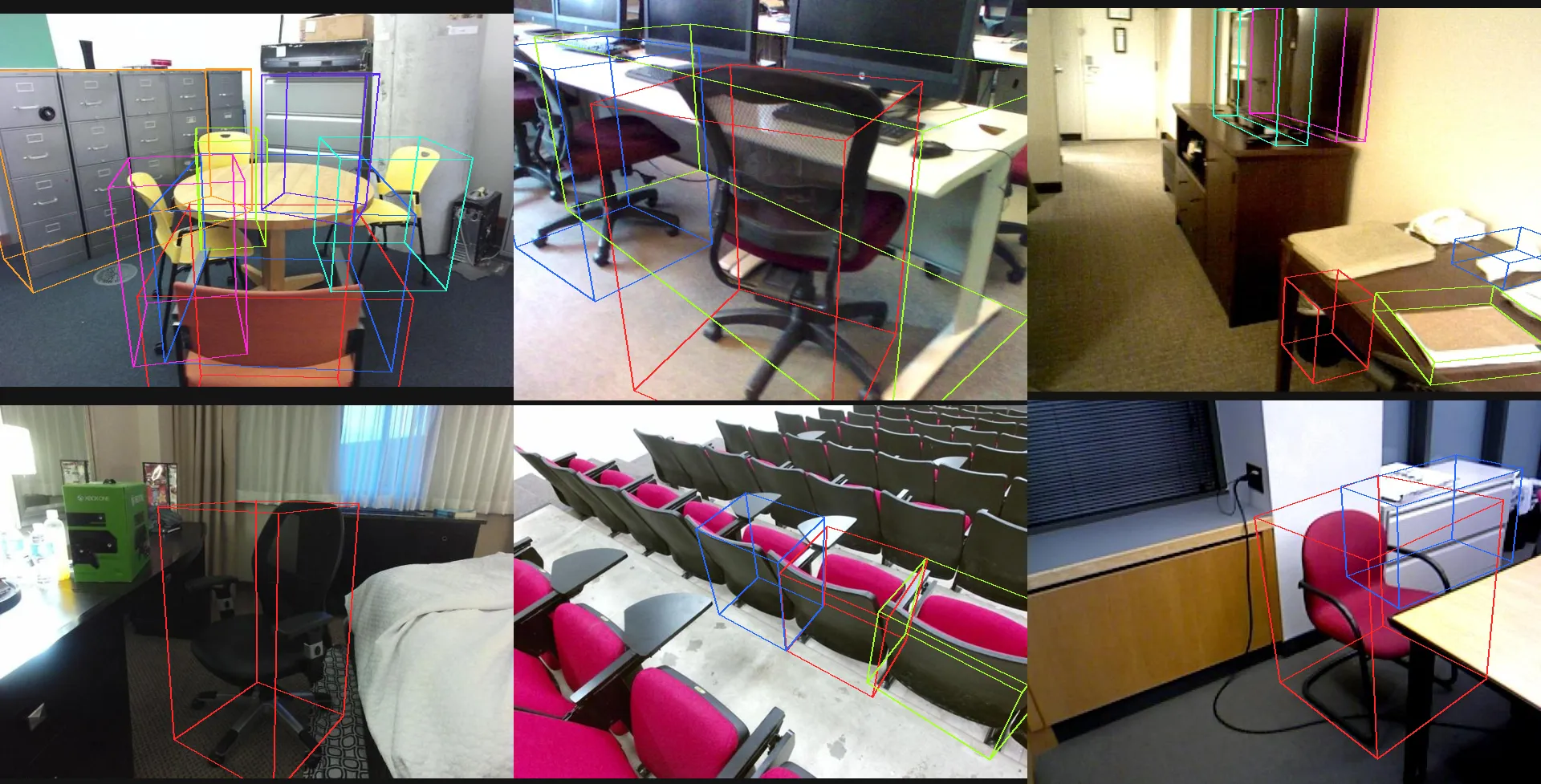
SUN RGB-D 4,876
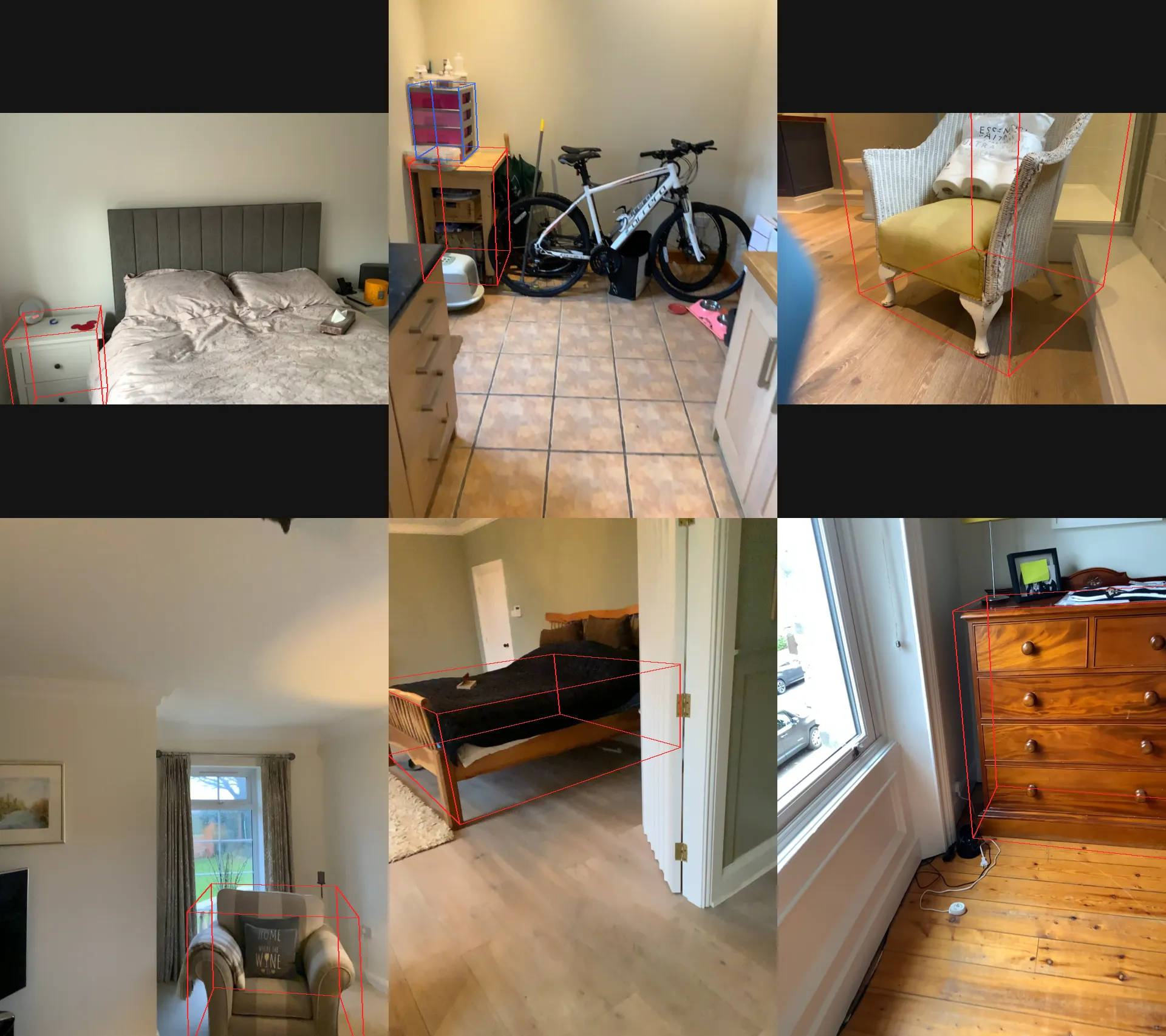
ARKitScenes 46,136
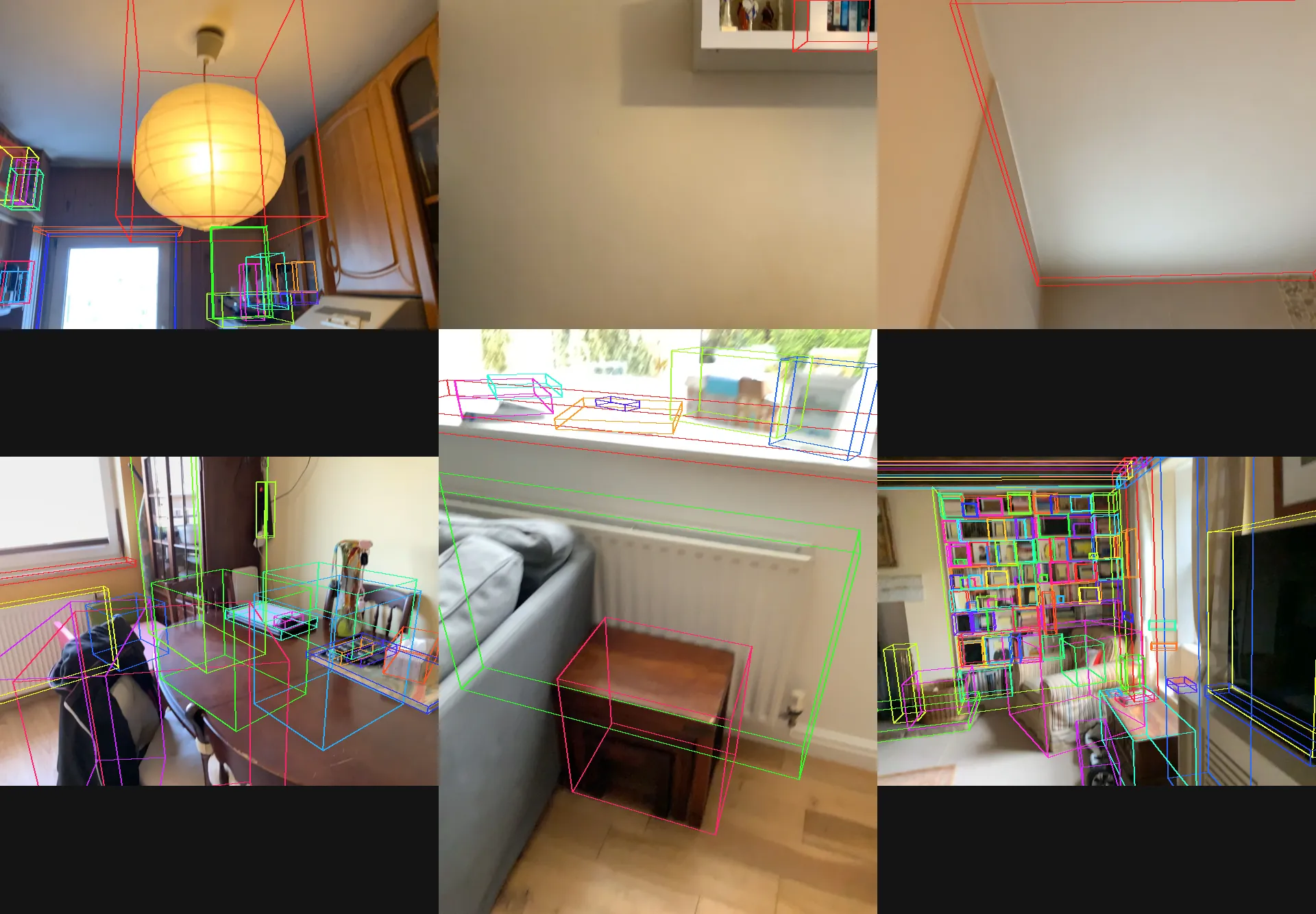
CA-1M 195,186
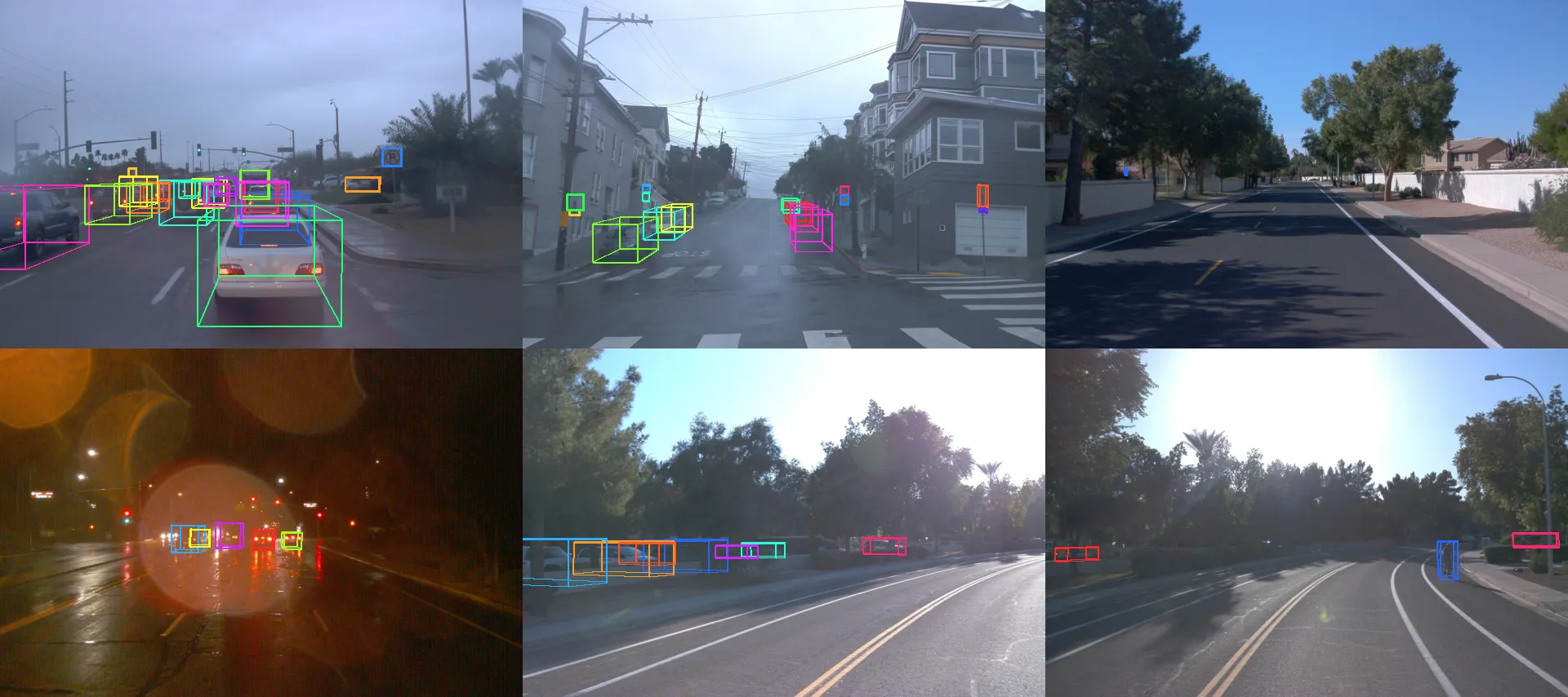
Waymo 78,680
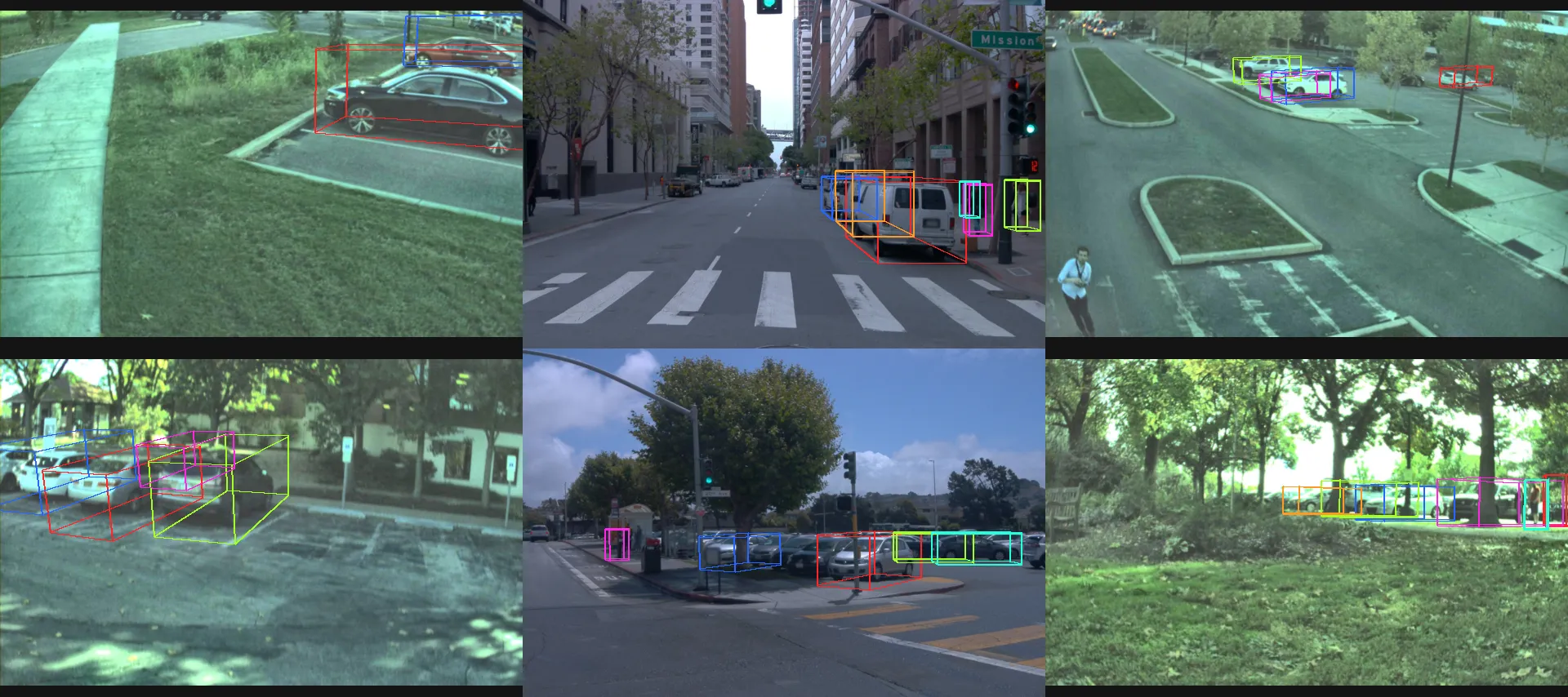
3EED det 11,661
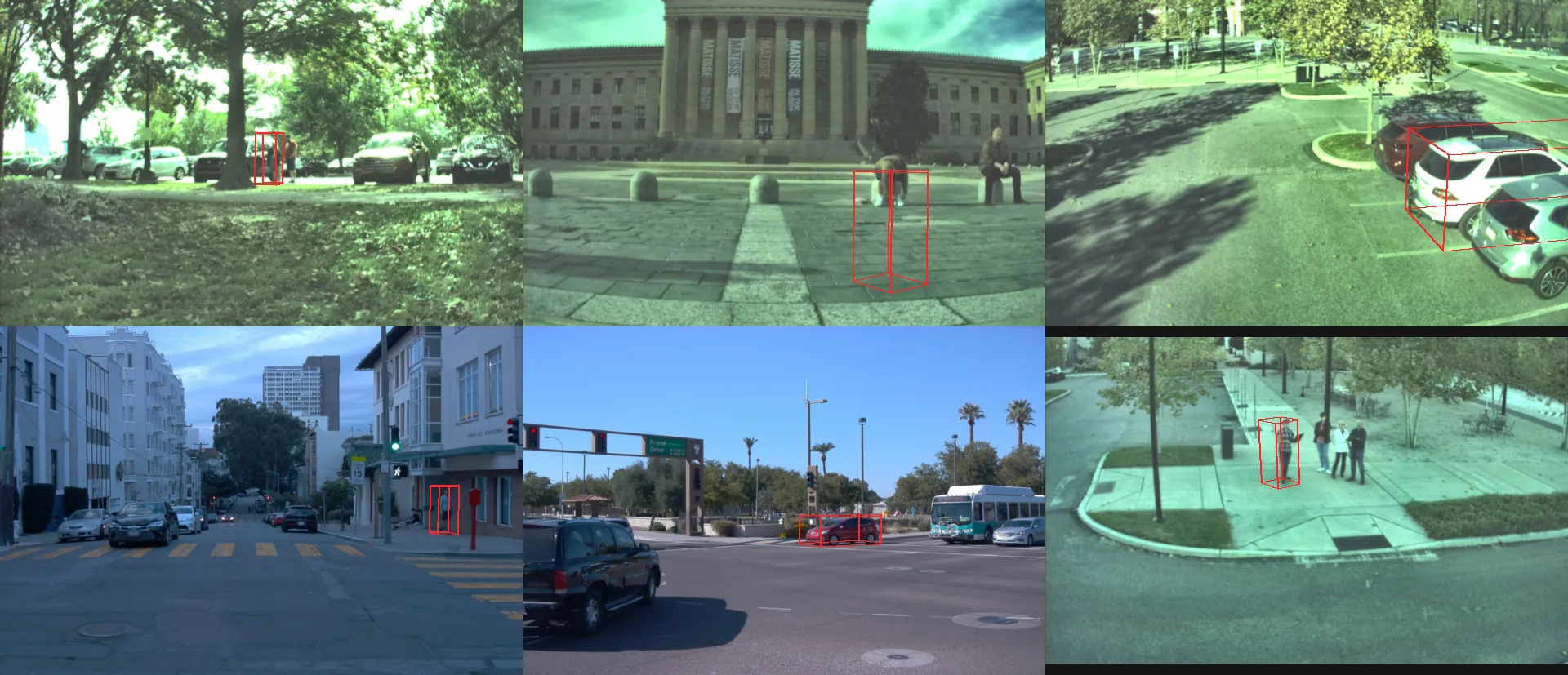
3EED ref 10,843
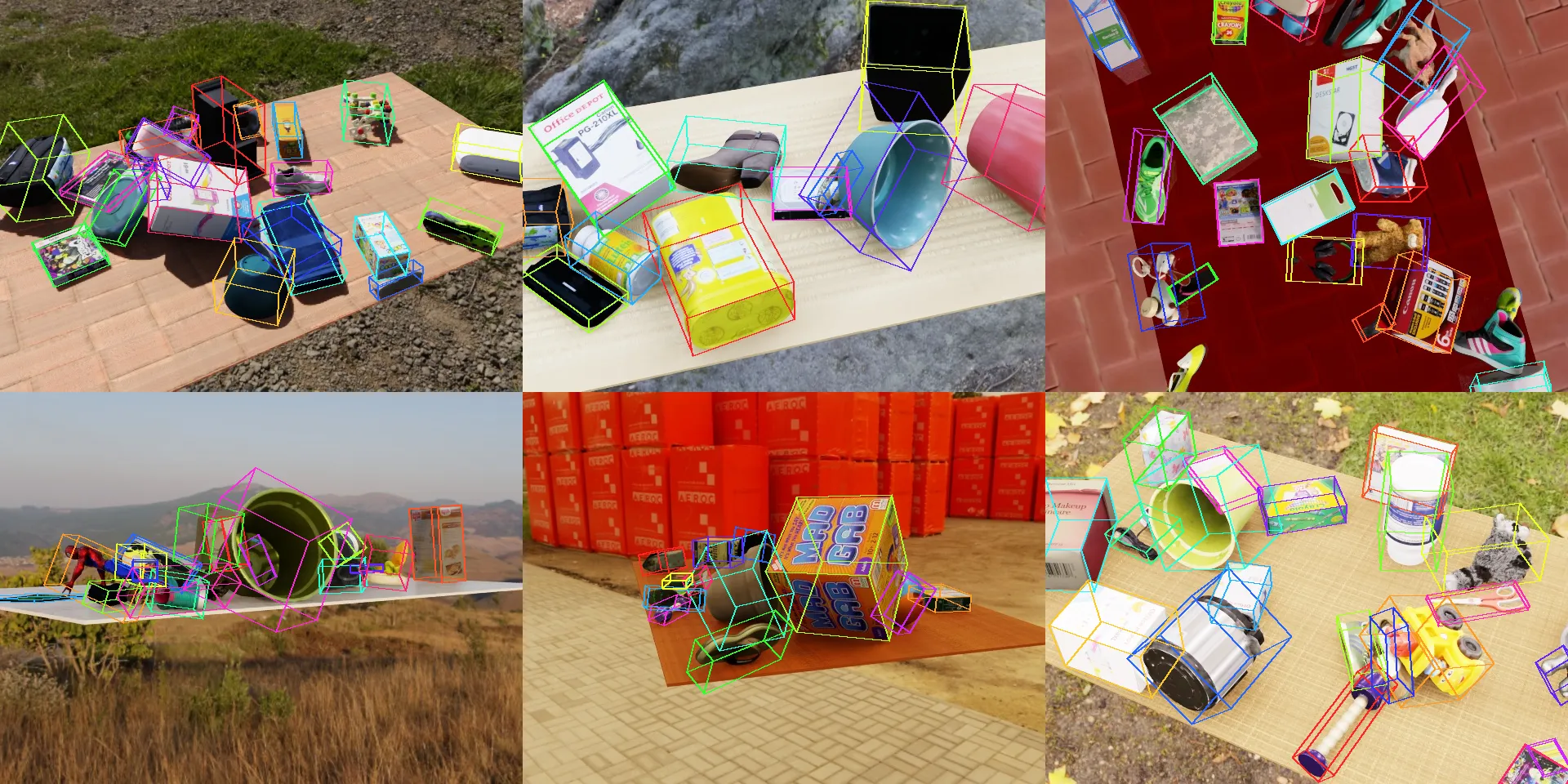
FoundationPose 423,915
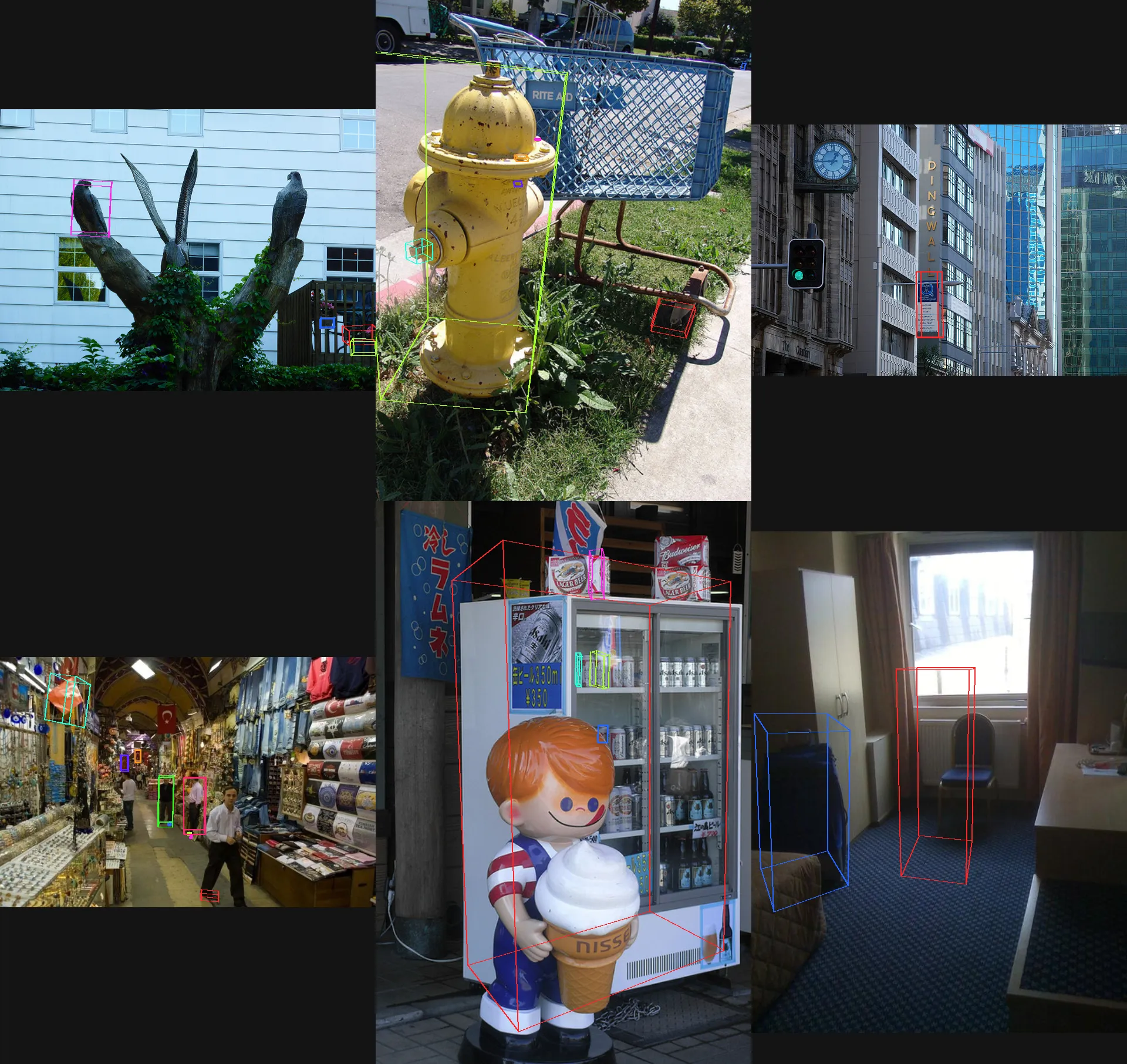
In-the-wild 88,847
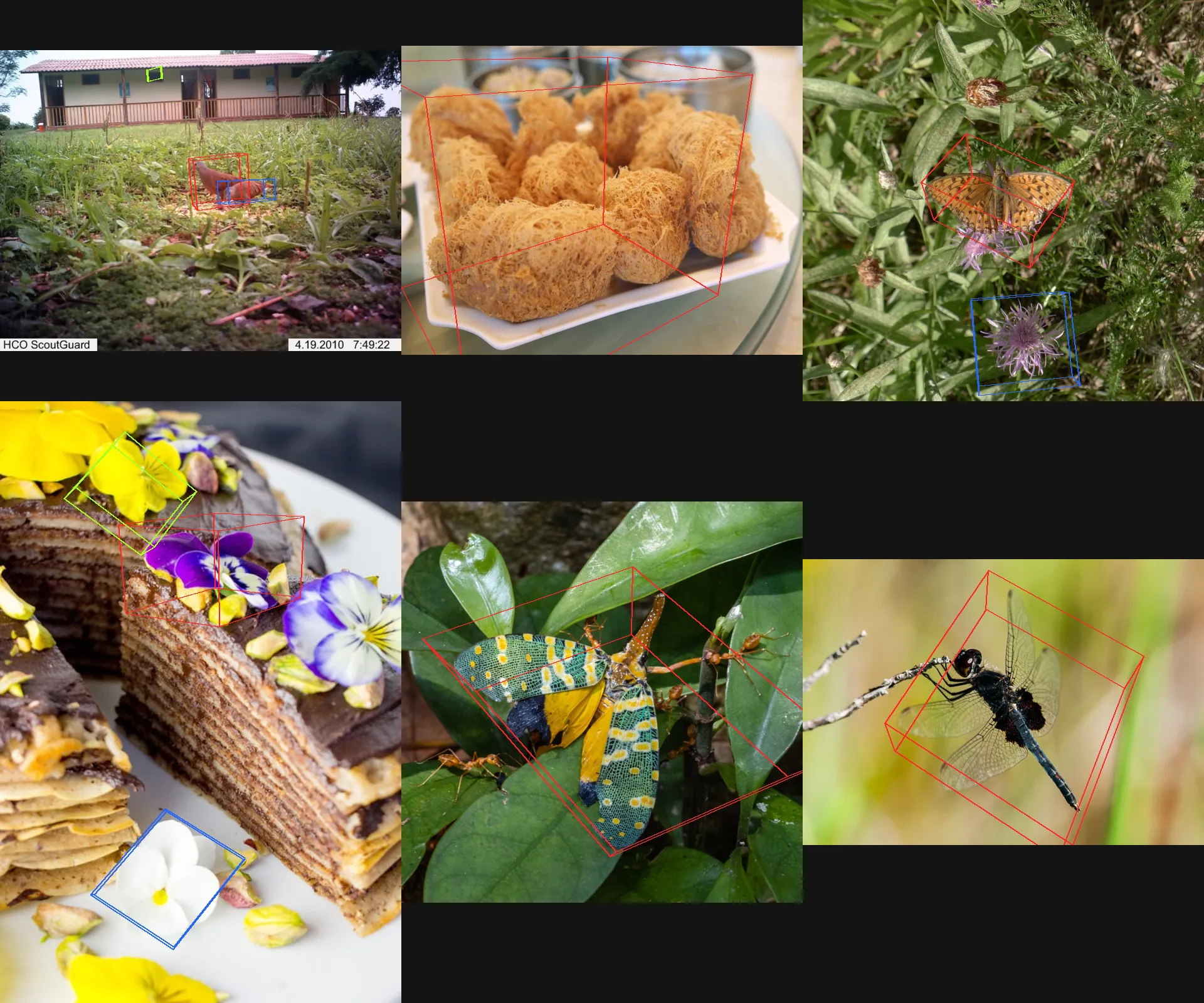
V3Det 14,132
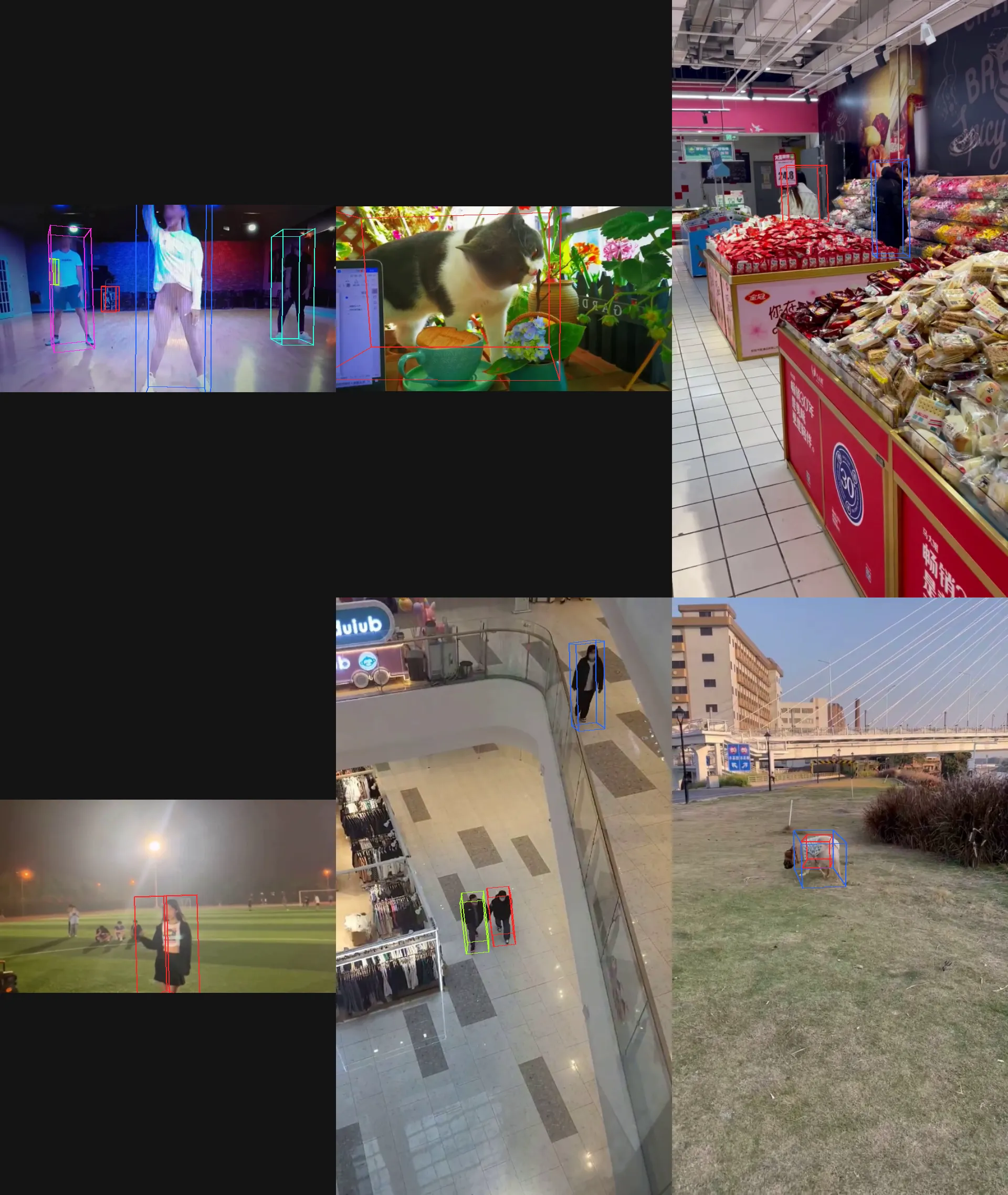
SA-V frames 46,724
- The first 13 are the WildDet3D training data (Omni3D: KITTI … ARKitScenes; CA-1M; Waymo; 3EED; FoundationPose; in-the-wild); SA-V frames are added as single images.
- 1,040,356 samples in total; numbers are samples per dataset.
Q4 · Image pre-training
Video training without vs with image pre-training
V2: no image stage; video training on SA-V only (46,724 videos); last 4 ViT blocks, tracker, 3D head; step 20,000.
S2: stage 1 on 14 image datasets, then 7 video datasets + 15% image steps; last 4 ViT blocks, tracker, 3D lift and head; epoch 4.
| 3D AUC | SA-V | CA-1M | ADT | EmbodiedScan | ARKitScenes† | Waymo | nuScenes† | SAIL-VOS 3D | Objectron† | HOI4D | Mean (10) |
|---|---|---|---|---|---|---|---|---|---|---|---|
| V2 | 0.196 | 0.025 | 0.004 | 0.092 | 0.153 | 0.052 | 0.075 | 0.057 | 0.305 | 0.147 | 0.111 |
| SAM3.1 + WildDet3D, RGB | 0.159 | 0.100 | 0.013 | 0.149 | 0.312 | 0.191 | 0.221 | 0.057 | 0.698 | 0.249 | 0.215 |
| SAM3.1 + WildDet3D, + depth | 0.173 | 0.122 | 0.054 | 0.171 | 0.337 | 0.144 | 0.115 | 0.162 | 0.669 | 0.402 | 0.235 |
| S2 | 0.466 | 0.186 | 0.122 | 0.407 | 0.578 | 0.270 | 0.265 | 0.329 | 0.590 | 0.871 | 0.408 |
| M2 · latest (S2 + mask anchor + 3D memory) | 0.552 | 0.252 | 0.181 | 0.438 | 0.607 | 0.312 | 0.304 | 0.375 | 0.597 | 0.886 | 0.450 |
Quick set of the 10 benchmarks, same videos for every row. SAM3.1 + WildDet3D: SAM3.1 tracks the 2D box, the official WildDet3D lifts it to 3D per frame (no temporal model); + depth = same depth input as ours. † images only (stage 1), not in video training.
Datasets not used in any training · all rows with depth
| 3D AUC | Argoverse 2 | DynOPETs COPE119 | DynOPETs UOPE56 | HOT3D | Mean (4) |
|---|---|---|---|---|---|
| SAM3.1 + WildDet3D, + depth | 0.127 | 0.256 | 0.239 | 0.000 | 0.155 |
| WildDet3D with ground-truth 2D boxes, + depth | 0.239 | 0.284 | 0.283 | 0.000 | 0.201 |
| S2 | 0.158 | 0.603 | 0.633 | 0.082 | 0.369 |
| M2 · latest (S2 + mask anchor + 3D memory) | 0.161 | 0.717 | 0.696 | 0.062 | 0.409 |
- S2 is above V2 on all 10 benchmarks (0.408 vs 0.111); V2 and S2 also differ in video data, so the gap is not from image pre-training alone.
- Ours is above SAM3.1 + WildDet3D on 9 of 10; on Objectron the baseline is higher (0.698 / 0.669 vs 0.590 / 0.597), and Objectron is in WildDet3D’s own training data.
- Unseen datasets: M2 0.409, S2 0.369 vs 0.155, mostly from DynOPETs. On Argoverse 2 WildDet3D with ground-truth 2D boxes is higher (0.239): 2D tracking is the limit there.
- HOT3D: WildDet3D 0.000 even with ground-truth 2D boxes (boxes ≈2.9 box diagonals too far along the ray); ours 0.06–0.08; Aria wide-FOV, like ADT.
- Single seed; quick set (CA-1M 30 of 108 videos; S2 on the full set differs by up to 0.04). Unseen sets not yet evaluated RGB-only.
Q4 · Image pre-training
Same videos: V2 (left) vs S2 (right)
Waymo
HOI4D
SA-V
EmbodiedScan
predictionground truth hidden · press G (or the GT button) to show itheader: video 3D AUC and current-frame 3D IoU; inset: top view
Q4 · Image pre-training
Videos: datasets not used in any training
DynOPETs (COPE119)
DynOPETs (UOPE56)
left panel: SAM3.1 + WildDet3D (+ depth) · right panel: S2 · header: video 3D AUC and current-frame 3D IoUpredictionground truth hidden · press G (or the GT button) to show it
Q4 · Image pre-training
More videos: datasets not in video training
Argoverse 2 · unused
HOT3D · unused
Objectron · images only
ARKitScenes · images only
nuScenes · images only
Each video: left panel SAM3.1 + WildDet3D (+ depth), right panel S2; red = prediction (ground truth hidden; press G or the GT button to show it); header: video 3D AUC and current-frame 3D IoU; inset: top view. “images only” = in stage-1 image data, not in video training. One clip per dataset.